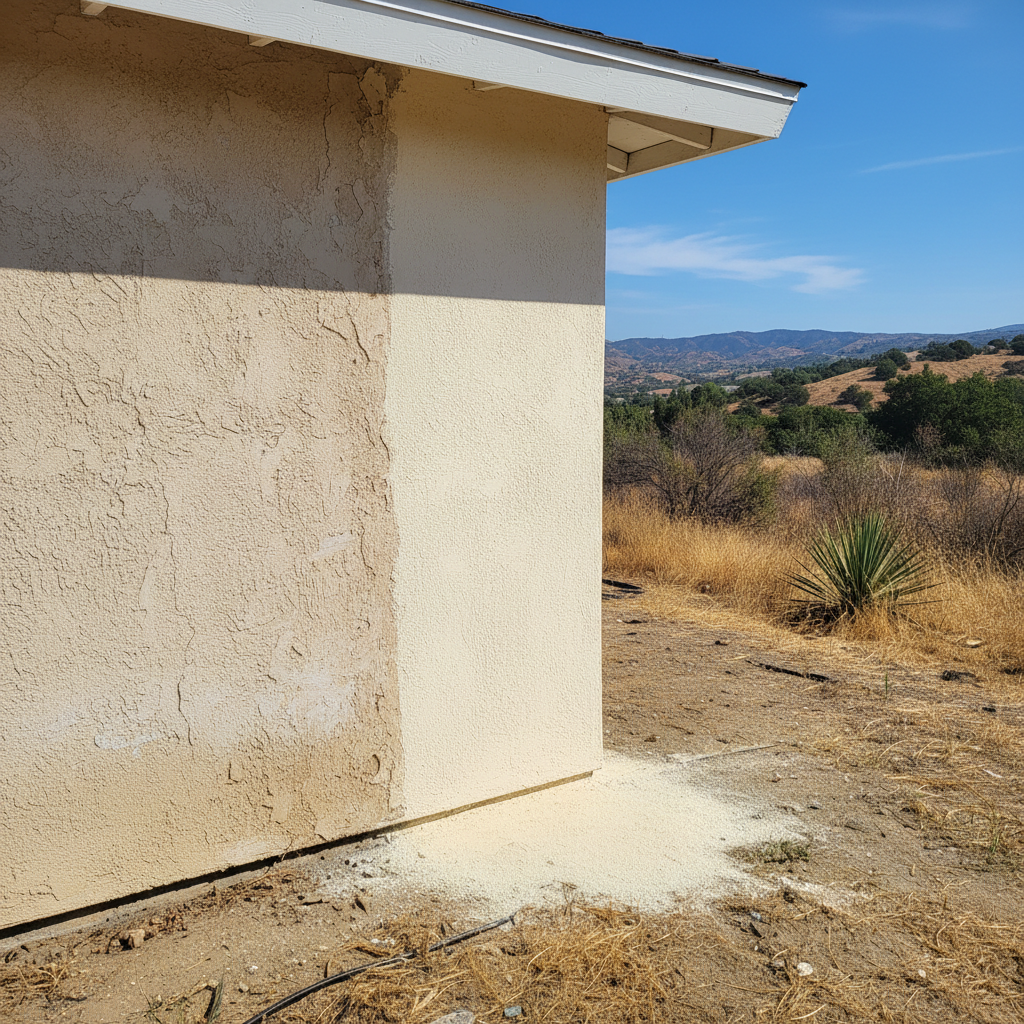
So, you've got some stucco issues on your house. Maybe it's a crack, a ding from a rogue baseball, or some water damage that's starting to show. Whatever the problem, you're looking at repairs, and you've probably heard about two main ways to tackle it: patching or resurfacing. As a contractor who's been doing this in Simi Valley for years, I've seen homeowners go both routes. Let's talk about what each really means for your home, your wallet, and how long it'll last.
Patching: The Quick Fix
Patching is exactly what it sounds like. We find the damaged spot, chip out any loose or compromised stucco, and then apply new stucco. Our goal is to match the existing finish and color as closely as possible. Think of it like putting a bandage on a wound.
Cost: This is usually the cheaper option upfront. You're paying for less material and less labor because we're only working on a small section. If you've got a single, isolated crack or a small hole, patching can be pretty affordable.
Durability: A good patch, done right, can hold up for a long time. The key, of course, is 'done right.' If the underlying issue isn't fixed, or if the patch isn't properly bonded, it won't last. The biggest challenge with patching is that the new stucco can sometimes cure differently than the old. This is especially true with our dry, hot summers followed by cooler, damp winters. This can lead to new cracks forming around the patch over time.
Maintenance: Not much extra maintenance for a patch itself, but you'll want to keep an eye on it. If the original damage was due to water intrusion, you'll need to make sure that source is completely resolved, or you'll be patching again.
Appearance: This is where patching often falls short. Matching existing stucco texture and color perfectly is incredibly difficult, especially on older homes. Stucco fades and changes over time due to sun exposure, smog, and even just age. A brand-new patch, no matter how skilled the installer, will almost always look like a patch. It might blend in okay from a distance, but up close, you'll likely see a difference. Think about homes in the older parts of Simi, like near the Civic Center — that stucco has seen decades of sun. A new patch on that will definitely stick out.
Resurfacing: The Fresh Start
Resurfacing, sometimes called re-stuccoing or a stucco overlay, is a more thorough approach. Instead of just fixing a small spot, we prepare the entire wall — or even the entire house — and apply a new layer of stucco over the existing, structurally sound stucco. It's like getting a whole new skin for your house, if you will.
Cost: This is a bigger investment upfront. You're paying for more material and significantly more labor. It's a much larger project. However, when you factor in the long-term benefits and the improved curb appeal, it often makes more sense than repeatedly patching.
Durability: When you resurface, you're essentially giving your home a brand-new stucco system on the exterior. This means uniform curing, consistent adhesion, and a fresh protective layer. Done correctly, a resurfaced home can look great and perform exceptionally well for decades. You're not just fixing a symptom; you're often addressing the overall condition of the exterior.
Maintenance: A resurfaced home is generally easier to maintain. You'll have a consistent surface to clean, and you won't have to worry about different sections aging at different rates. Just like any stucco, regular inspections for cracks and keeping up with painting (if it's a painted finish) will keep it looking good.
Appearance: This is where resurfacing truly shines. You get a completely uniform, fresh look. You can choose a new color, a new texture, or simply replicate the original look without any visible patches. Your home will look cohesive and refreshed, significantly boosting its curb appeal. It's a complete transformation, not just a repair.
My Recommendation for Simi Valley Homeowners
Look, if you have a tiny, isolated ding that's barely noticeable and your stucco is otherwise in fantastic shape, a careful patch might be all you need. But honestly, in most cases I see here in Simi Valley, especially with our older homes and the way our weather cycles affect stucco, I lean towards resurfacing.
Why? Because most stucco problems aren't just one tiny spot. They're often indicative of an aging exterior, or multiple small issues that, when patched individually, leave your house looking like a checkerboard. You end up spending money on multiple patches that never quite match, and you're still left with an exterior that doesn't look its best.
Resurfacing gives you a clean slate. It adds a fresh, protective layer that's uniform in color and texture. It's a better long-term investment in your home's value and appearance. Plus, with the way our soil shifts and settles here, especially in areas like the hills north of the 118, small cracks can become bigger problems. A full resurface provides a more robust, consistent barrier.
It's a bigger project, yes, but knowing your home's exterior is solid and looks fantastic is worth it. When you're ready to talk through your options and get a clear picture of what's best for your home, give Simi Valley Stucco & Plastering a call. We'll come out, take a look, and give you an honest assessment.