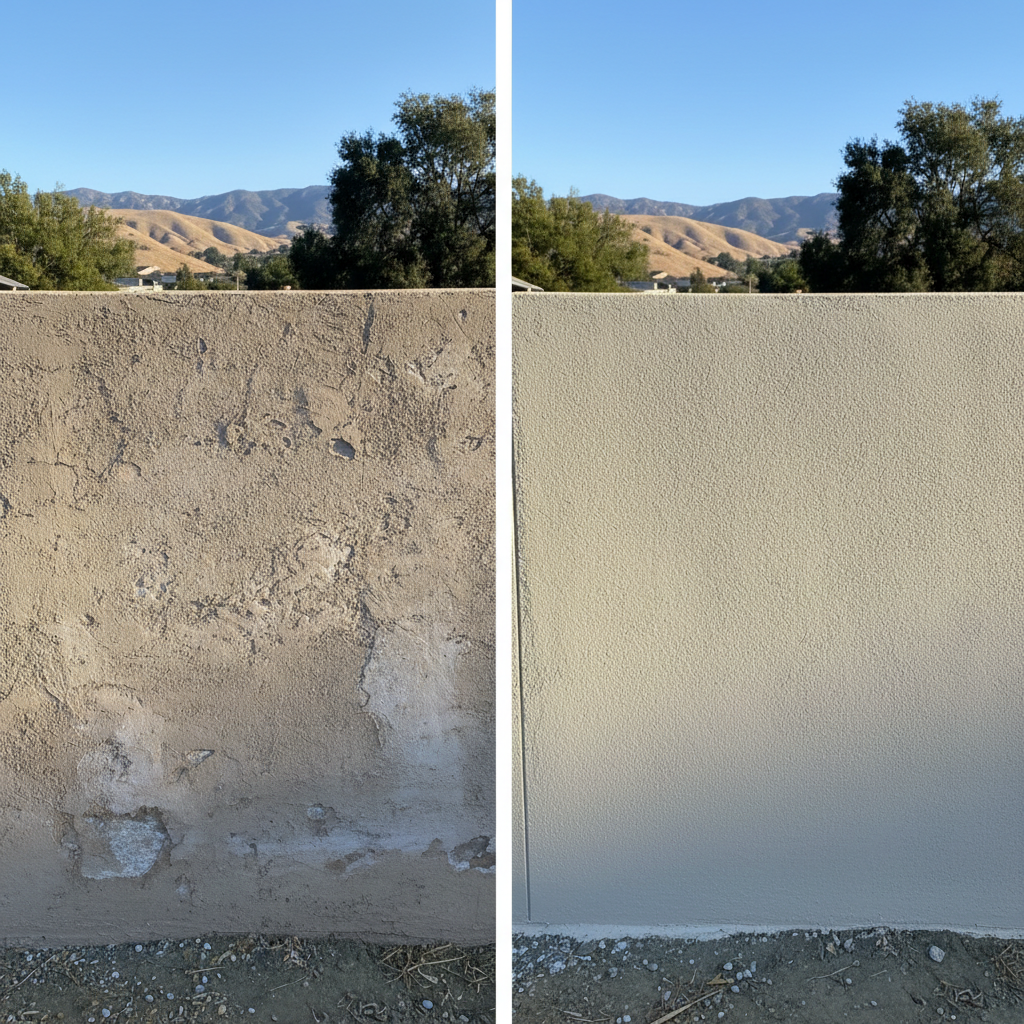
Alright, let's talk commercial stucco. If you own a business here in Simi Valley, you already know how much curb appeal matters. Whether it's a retail spot on Tapo Canyon or an office building near the 118, the outside of your building definitely makes that crucial first impression. When we're talking stucco, you've really got two main types: Traditional (often called hard coat) stucco and EIFS (that's Exterior Insulation and Finish System). I get asked a lot about which one's better, so let's really dig into it.
What's Traditional Stucco, Anyway?
Traditional stucco is probably what most people picture when they hear the word "stucco." It's been around forever, literally. We're talking three coats here: first a scratch coat, then a brown coat, and finally, the finish coat. Workers apply it over a lath (usually wire mesh) and a building paper or felt, right onto the sheathing. It's a cement-based product, so it ends up hard, heavy, and it breathes.
Okay, So What's EIFS Stucco?
EIFS is a bit more modern. Think of it like a layered cake for your building's exterior. It starts with an insulation board (usually expanded polystyrene, or EPS) that gets attached to the outside sheathing. Then, a base coat with a fiberglass mesh goes over the insulation, and finally, a synthetic finish coat tops it all off. It might look like stucco, but it's totally different underneath.
Cost: What You Pay Now vs. What You Pay Later
When you first look at the price tag, EIFS can sometimes cost a little more than traditional stucco, especially for smaller jobs. That's because of the specialized materials and the way we install it. But that's not the whole story, is it? EIFS gives you some serious insulation benefits, which can mean lower heating and cooling costs for your business. Here in Simi Valley, with our super hot summers, those savings can really add up. So, while you might pay a bit more upfront, the energy savings could actually make it cheaper over the long haul.
Durability & How to Keep It Looking Good
Traditional stucco is tough. It's cement, so it handles impacts well and stands up to everyday wear and tear. It also doesn't need much maintenance; usually, a good wash now and then does the trick. The biggest thing to watch out for with traditional stucco is cracking, especially with all our seismic activity here in California. Small hairline cracks are pretty common, and while they don't always spell trouble, they can let water in if you don't seal them. Fixing traditional stucco can sometimes be a little tricky to match perfectly.
EIFS is durable too, but in a different way. It's more flexible than traditional stucco, so it's less likely to crack from the building moving around. It also resists impacts really well, especially if you pick a high-impact version with a thicker base coat and mesh. The finish coat on EIFS is synthetic, which means it's great at resisting fading and mildew. Maintenance is similar: just clean it regularly. The main thing with EIFS is making sure it's installed correctly to avoid water intrusion issues. If those happen, they can be a much bigger headache than with traditional stucco. But when it's done right, what a solid system!
How It Looks & What You Can Do With It
Both systems can give your building a beautiful, smooth appearance. Traditional stucco has that classic, earthy, textured feel. You can get different finishes, everything from smooth to a sand-like texture. We mix the color right into the final coat, so it's pretty consistent.
EIFS actually offers even more design freedom. Because it uses an insulation board, you can easily create cool architectural details like cornices, bands, and special shapes. Doing those with traditional stucco would be much harder, or just cost a lot more. The finish coats for EIFS come in a huge range of colors and textures, and they tend to stay more vibrant and consistent over time. If you're going for a very specific, modern look or want to copy intricate designs, EIFS often gives you more choices.
My Recommendation for Simi Valley Businesses
Look, both traditional stucco and EIFS have their place. For many older commercial buildings around Simi Valley, especially those built before the 80s, you'll definitely see traditional stucco. It's a system that's proven itself.
However, for new commercial construction or big renovations here, I generally lean towards EIFS. Why? Our climate. Those hot summers mean energy efficiency is a huge deal for businesses. The continuous insulation EIFS provides really changes the game for keeping those utility bills down. Plus, EIFS's flexibility means it can handle a bit more building movement without cracking, which is a definite plus in earthquake country. You also get fantastic moisture resistance when we install it correctly, and that's critical for protecting your investment.
The key, no matter which one you pick, is finding a qualified contractor. With EIFS, proper flashing and detailing around windows and doors are absolutely critical to prevent water problems. You really don't want someone cutting corners there. Here at Simi Valley Stucco & Plastering, we've got experience with both, and we make sure the job gets done right, protecting your business for years to come. Don't just pick based on the lowest bid; pick based on expertise and a solid track record.